
Dulse is one of Europe's most sought-after seaweeds, yet almost all of it is still harvested by hand from wild populations. PalmariaPlus, a three-year European project coordinated by Nofima, is laying the practical research and groundwork towards commercial dulse cultivation.
A prized seaweed and a supply problem
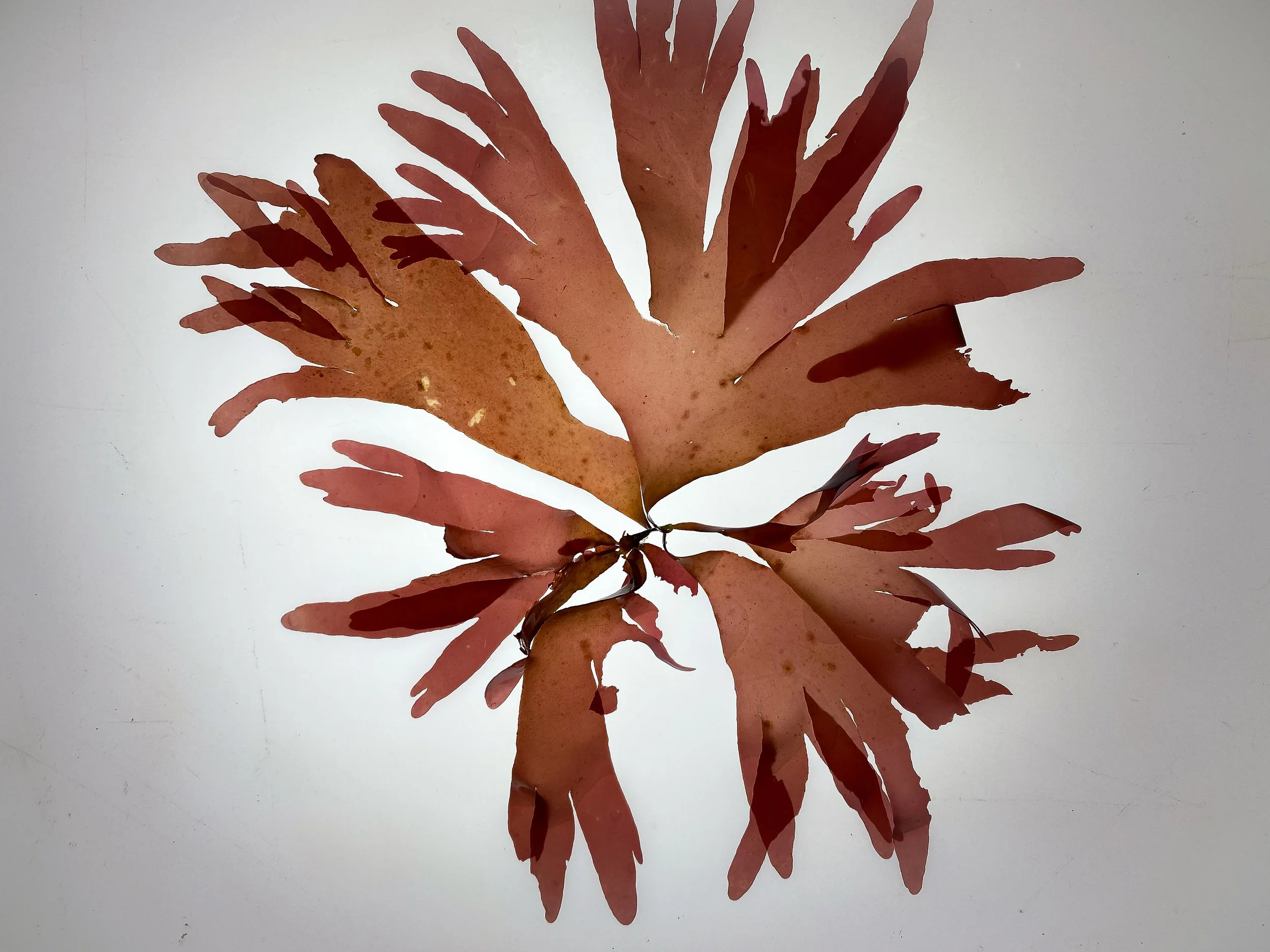
Dulse (Palmaria palmata). Photo: Nofima
Dulse (Palmaria palmata) grows on North Atlantic shores from northern Portugal to the Barents Sea. It has been consumed by coastal communities in Brittany, Ireland and Iceland for well over a thousand years. Today it attracts chefs and food companies far beyond those traditions. It has a distinctive umami taste, a relatively high protein content (about 7–19% of dry weight), and is also rich in fibre, minerals and some vitamins (e.g. B12). Beyond gastronomy and human nutrition, it holds potential as ingredient in animal feed among other applications.
Supply has not kept up with demand. Dulse is still largely harvested by hand from wild stocks, mainly in France, Ireland and Iceland, and volumes vary with weather events and grazing pressure from sea hares, snails and sea urchins. Demand exceeds supply, and prices have climbed: wholesale prices for dried dulse increased from roughly 16–19 € per kilo a decade ago to an estimated 40–75 € around 2023, and current prices are likely higher, in Norway well above that range.
Farming could provide a steady biomass of consistent quality without adding pressure on wild populations. But dulse is a difficult species to cultivate. Each plant releases far fewer spores than a kelp does and suffers high mortality from various infections. Besides, fertile plants are only found in the wild from late autumn to spring, which limits the cultivation in open sea since the optimal time for deployment of seeded substrates with young seedlings (3-8 mm) ranges from autumn to late winter and harvesting the following spring. There is some evidence this issue may be overcome by preconditioning dulse to produce sori out of season. Only a few companies have so far demonstrated commercial dulse cultivation, while a handful of smaller companies around the North Atlantic, including in Canada, Portugal, Denmark, Norway and Sweden, have run pilot-scale trials with mixed success.
PalmariaPlus: practical research over four countries
PalmariaPlus runs from January 2026 to December 2028 and is co-funded by the EU through the Sustainable Blue Economy Partnership. Nofima coordinates the project together with the University of Gothenburg (Sweden), DTU Aqua (Denmark) and Atlantic Technological University (Ireland). A defining feature is the strong involvement of small and medium-sized enterprises (SMEs) in the first steps of the value chain, to bridge the gap between research and industry. Cartron Point Shellfish (Ireland) is a project partner, and two Danish companies are also closely involved: Oceanwide Seaweed ApS, which produces the seeded lines, and Kerteminde Seafarm ApS, which runs farm trials in inner Danish waters. The Norwegian Seaweed Cluster also advises the project and communicates results and outcomes to relevant stakeholders.
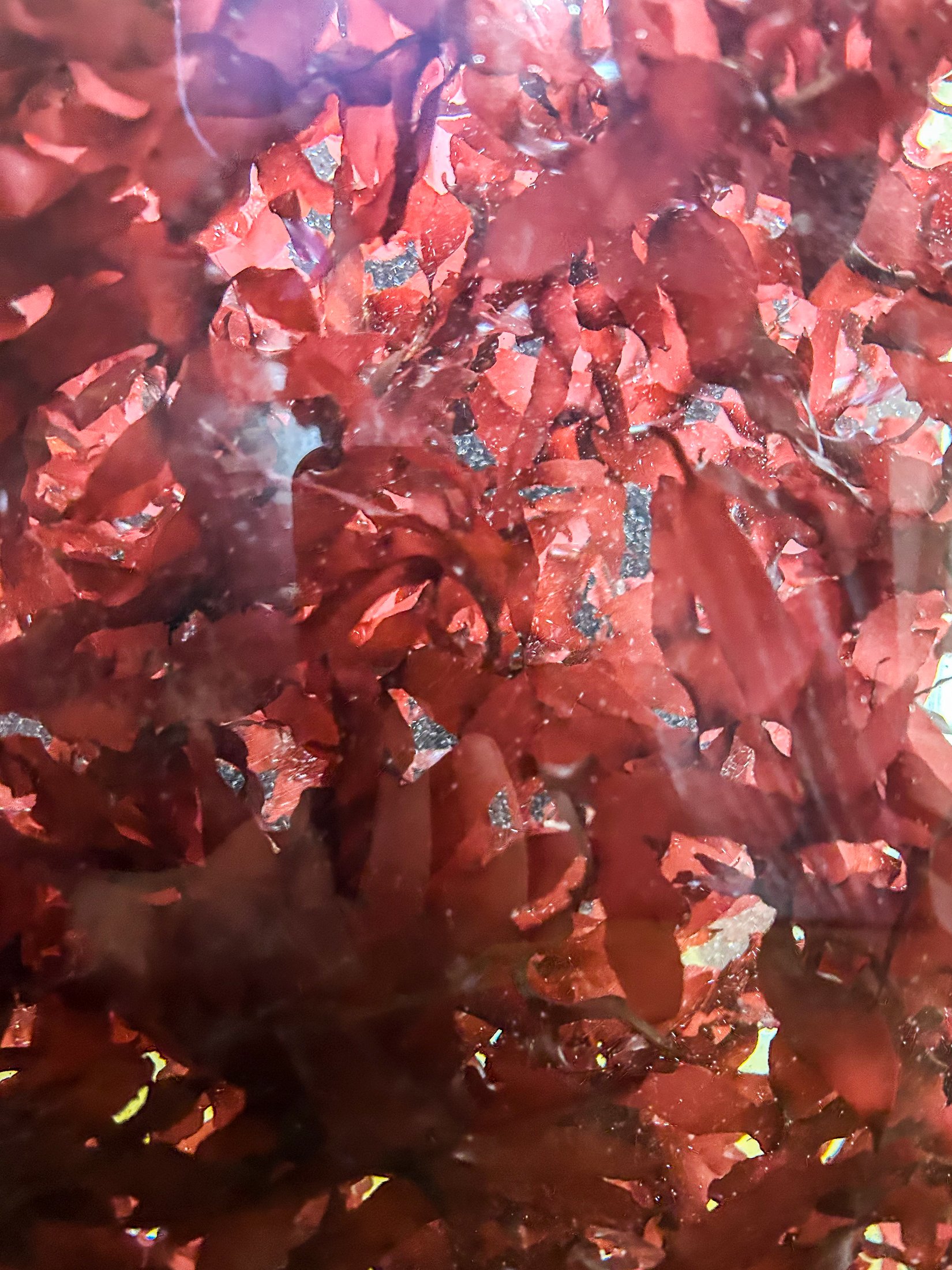
Tumble culture of dulse. Photo: Peter Schmedes
The work is organised in five work packages: hatchery production of seed, tank cultivation, cultivation at sea, hyperspectral tools to measure quality, and a comparison of how different dulse populations perform in cultivation. The project aims to support the diversification of seaweed farming beyond kelp, and to give producers seeded lines and practical knowledge to adapt cultivation methods to regional conditions. Dulse is the main focus, but trials are also run with Irish sea moss (Chondrus crispus), another red seaweed with potential for future commercial cultivation.
Seed first: stretching the season
As for kelps, farming of dulse starts in the hatchery, where spores settle on ropes or twine that are later deployed at sea. For dulse, a major bottleneck is the seed supply itself. During the first season (2025–2026), fertile dulse could only be found in Norway and Ireland (where the seaweeds can be found intertidally). Plants collected in Denmark and Sweden (normally at depths of 10m) were not reproductive. In addition, spore release naturally occurs in a relatively narrow window, peaking from October to December Spores released this late leave little time for seedlings to reach deployable size before the autumn–winter window closes, so earlier spore release is needed to make full use of this window. Despite these constraints, Oceanwide Seaweed produced about 2 km of seeded rope from the fertile material available.
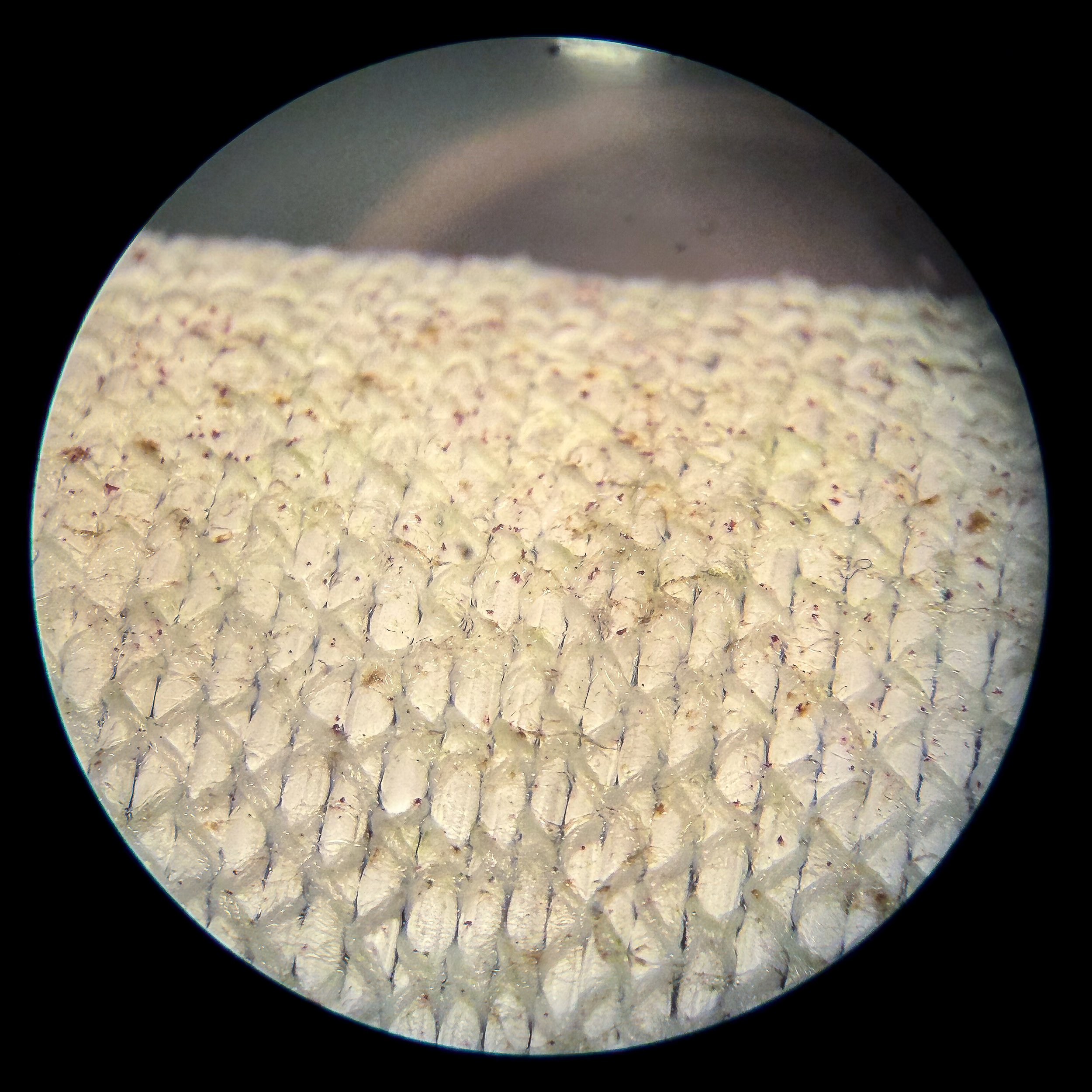
Seeded lines of dulse to be deployed for open-sea cultivation trials. Photo: Peter Schmedes
For the second season, DTU Aqua therefore started seed production earlier, in summer, to raise seeding capacity and allow for earlier deployment. This was done by conditioning and maturing the dulse biomass at lower temperatures and light levels, mimicking winter conditions to trigger spore release sooner. Blades were collected at five sites in Norway, Ireland, Sweden and Denmark. A key result so far is that hatcheries in every participating country have seeded dulse successfully, and Cartron Point Shellfish ran a smaller trial in Ireland.
Growth at sea: trials in Tromsø and Galway
Seeded lines went to sea in early 2026, at test sites less than 100 km from where the fertile plants were collected. In Tromsø, northern Norway, lines were deployed in February to test different twines and cultivation depths at three sites. After three months at sea, until May, biomass yields were good in Tromsø but there was no production from the sites in Senja and Lyngen. In Galway, Ireland, lines were deployed at several times between December 2025 and April 2026 at one site, with good growth and clean fronds free of epiphytes through April. Successful cultivation trials at sea were also reported from Denmark from previous hatchery production.
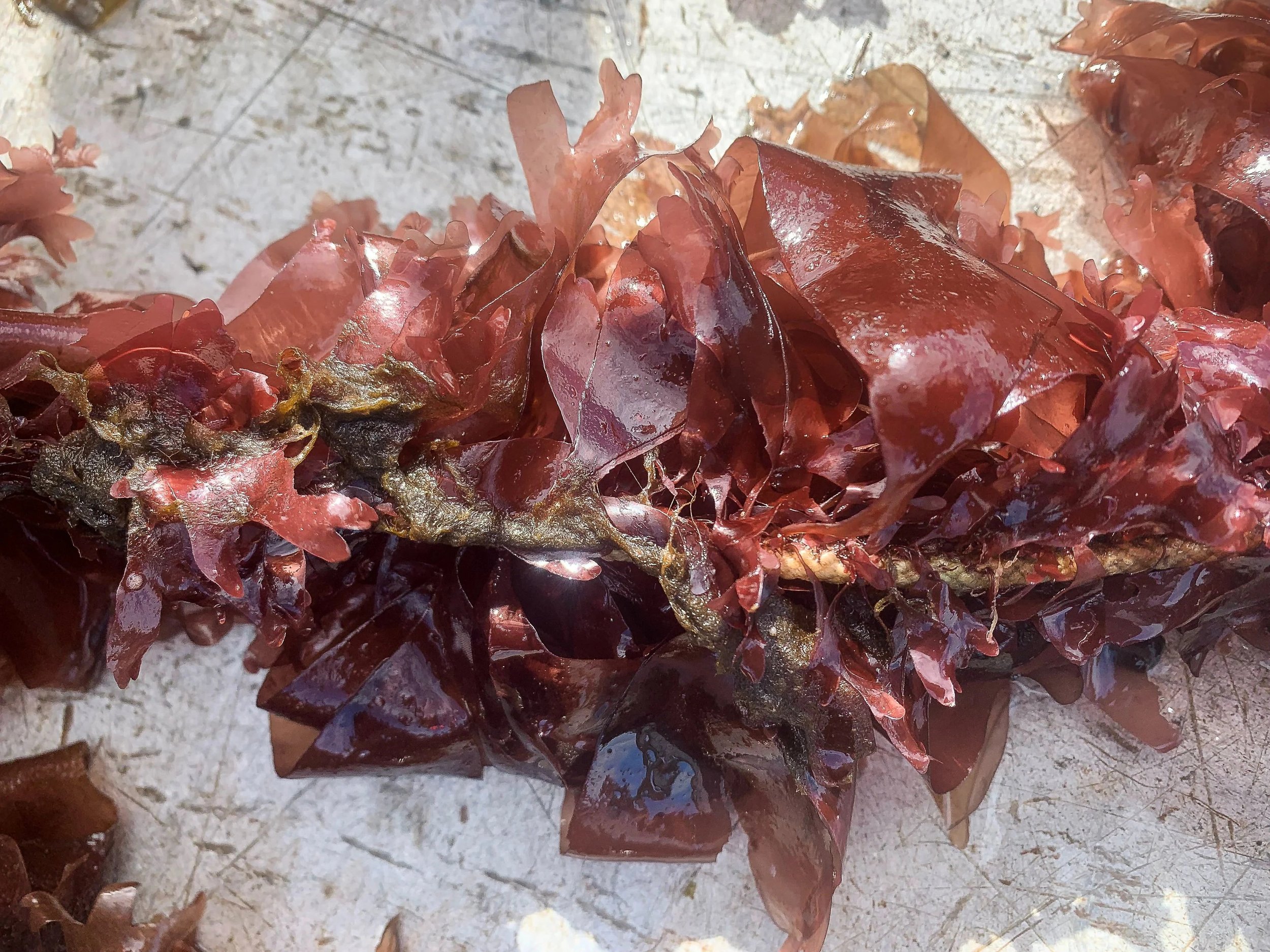
Lines of cultivated dulse in Galway, Ireland, in April 2026 (left). Photo: Atlantic Technological University
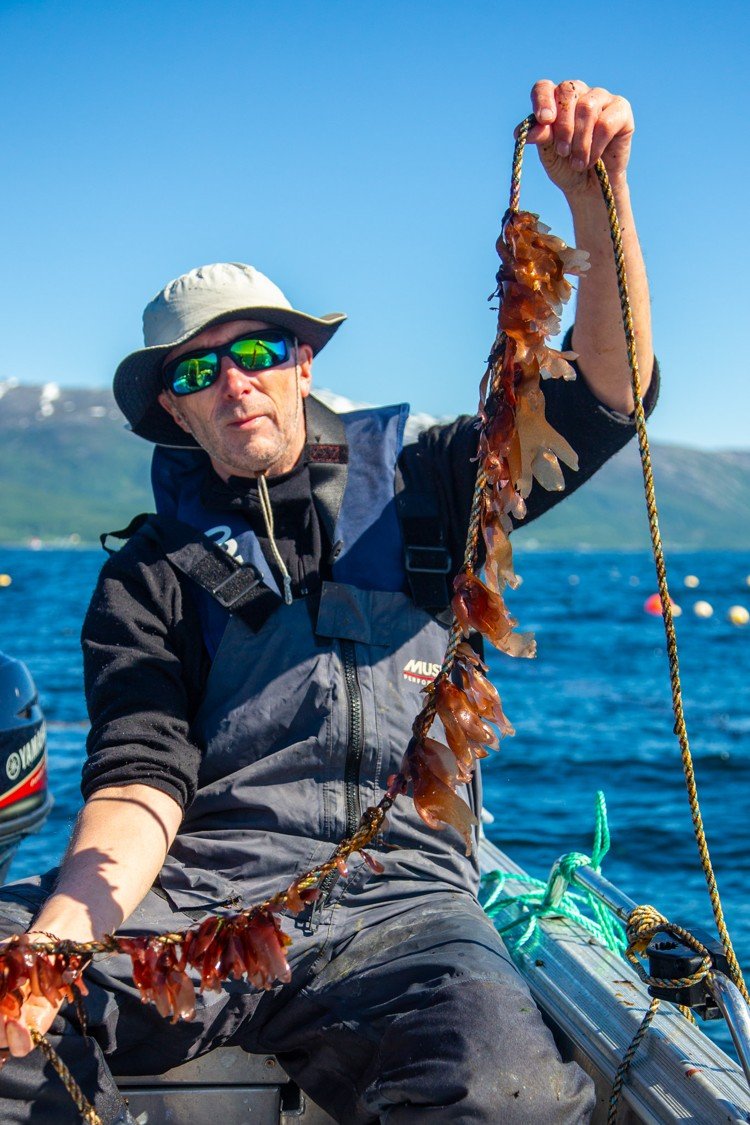
Lines of cultivated dulse in Tromsø, Northern Norway. Photo: Nofima
Results like these are why the project runs trials in several regions. The first trials show that acceptable yields can be achieved, but that farming methods must be adapted to local conditions to get high-quality biomass. This is a main topic for the second growth season (2026–2027). Seeded substrates have been delivered to partners for open-sea cultivation trials in Denmark, Sweden, Ireland and Norway. In total, the project’s hatcheries have produced more than 5 km of seeded rope using current seeding methods, a unique result that supports the development of dulse cultivation. Environmental loggers at each farm will allow a systematic comparison and help identify the critical factors affecting dulse growth.
Tank trials simulating depth
At the University of Gothenburg, tank experiments test how pH, temperature and light spectrum affect dulse growth, its carbon-to-nitrogen (C/N) ratio and its pigments. Different light spectra mimic the effect of depth, because seawater filters out parts of daylight. Growth was highest under light simulating 5 m, compared with 10 m and 20 m. The deeper the simulated depth, the lower the C/N ratio, meaning that the light-starved dulse held relatively more nitrogen, and so more protein, in its tissue. For growers, this suggests possible trade-offs between how fast dulse grows and its composition, which could be tailored by adjusting cultivation depth.
Develop simple methods for quality assessment
Like that of most foods, the nutritional profile of dulse is normally determined by laboratory analyses, which are both costly and slow. PalmariaPlus investigates hyperspectral imaging as a non-destructive, real-time and cost-efficient method for quality control. A camera capturing light in the visible and near-infrared range, and statistical models trained on laboratory data turn images of dulse into estimates of valuable compounds such as protein, carotenoids and antioxidants.
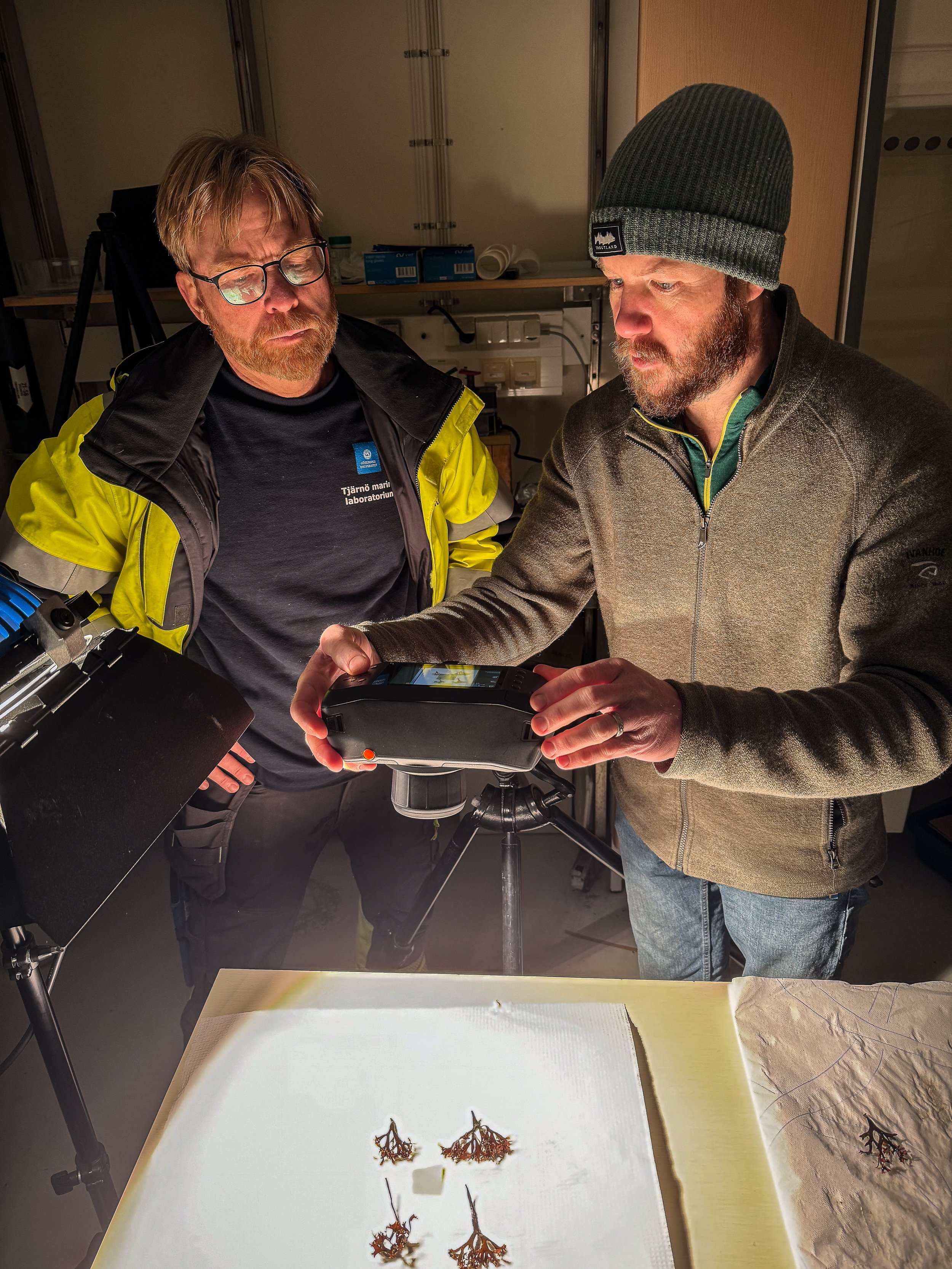
Project coordinator Evan Durland taking hyperspectral images of seaweeds. Photo: Nofima.
In the first tests, pigments (chlorophyll a, lutein and carotenes) were measured in the laboratory and compared with the hyperspectral images. A model was developed, that could reliably predict the pigment content of dulse from hyperspectral images. The study also showed that light-starved dulse is spectrally distinct. It has less chlorophyll and fewer carotenoids than dulse grown under light simulating shallower water, but more phycoerythrin, a pigment that harvests light. Already tested successfully on kelps (Hrólfsdóttir et al. 2025), the approach could become a routine quality check for farmed seaweed.
What comes next?
In 2027 the project will investigate whether genetically distinct dulse populations perform differently in aquaculture and under climate stress. Stock cultures from Ireland, Norway, Denmark and Sweden will be moved to a "common garden", a bio-secure laboratory at the University of Gothenburg where all populations share the same conditions. Temperature-stress experiments will then show how each population copes and give an indication of their resilience to future ocean conditions.
PalmariaPlus is laying the groundwork, it will not get us too the finish line. The first season has shown promising results from critical steps of the aquaculture production of dulse and demonstrated that good yields can be achieved. The work will be continued and consolidated by DiverseLTA, an internal Nofima project beginning in 2027 and running until 2029 on low-trophic species of commercial interest, dulse included. The PalmariPlus partners also plan workshops and training for the seaweed industry, so that results reach the farmers who will need them.
Read more
Sustainable Blue Economy Partnership (SBEP) – PalmariaPlus - Advance the production and market viability of red seaweeds in Europe by improving reproduction and cultivation techniques as well as developing novel tools and approaches to quantify and control product quality
Stévant et al. (2023). Concise review of the red macroalga dulse, Palmaria palmata (L.) Weber & Mohr. Journal of Applied Phycology, 35(2), 523–550 (Open access)
Hrólfsdóttir et al. (2025). Multispectral imaging techniques for evaluating physicochemical-, antioxidant, and sensory properties of Alaria esculenta and Saccharina latissima. Algal Research, 88-104009 (Open access)